First Nations Fellowship
Queensland Museum is pleased to launch its third annual First Nations Fellowship. The 2027 Fellowship is generously supported by Alida Rae Mayze and John Mayze.
Overview
Queensland Museum’s First Nations Fellowship is a 12-month professional development and research opportunity for an early career Aboriginal and/or Torres Strait Islander person working in, or aspiring to work in, the arts, cultural heritage, or galleries, libraries and museums (GLAM) sectors.
The Fellowship supports the Fellow to develop and deliver a research project that engages with Queensland Museum's collections, builds professional skills and connections, and contributes new knowledge and perspectives. Projects may focus on Aboriginal and Torres Strait Islander collections or explore other areas of the Museum's collections – such as cultural histories and biodiversity and geosciences – bringing a First Nations lens to the interpretation of objects, specimens and data.
Through access to collections, staff expertise and networks across Queensland Museum, the Fellowship creates opportunities for reciprocal learning and knowledge sharing between the Fellow, their community and the Museum. Community knowledge, cultural authority and appropriate cultural protocols are central to this approach, supporting new insights into the understanding, interpreting and documenting the Museum's collections.
Applications for the 2027 First Nations Fellowship close on Monday, 16 November 2026 at 11:59pm.
The 2027 Fellowship is generously supported by Alida Rae Mayze and John Mayze.
Outline
Collections
Queensland Museum is the custodian of rich and diverse collections of
Aboriginal and Torres Strait Islander artefacts, art and histories.
Queensland Museum recognises the rights of Aboriginal and Torres Strait Islander peoples to access, control, protect and maintain their cultural heritage and Indigenous Cultural and Intellectual Property (ICIP).
With appropriate Community consultation and approvals, the Fellow will be supported to access collections that may have significance to their community. Through their research, the Fellow may uncover new information and perspectives that deepen and enrich our knowledge and understanding of the collection.
Collaboration
The Fellowship is grounded in principles of mutual learning and
knowledge exchange. It encourages strong collaboration between
Queensland Museum, the Fellow, and the Fellow’s Elders and
communities. It is expected the Fellow will share the outcomes of
their research project with the communities to which the collection
items are connected.
Connections
The Fellowship experience will include:
- development of research and professional skills to support the Fellow in achieving their project outcomes;
- facilitated, behind-the-scenes access to explore cultural heritage materials and other relevant collections for the research project;
- advice and support from Queensland Museum staff on researching diverse collections;
- guidance from a Queensland Museum staff member (such as a Curator of Collection Manager) with experience relevant to the project;
- ongoing support and cultural guidance (as identified) from the Queensland Museum First Nations team;
- access to staff expertise to learn about museum practices such as conservation, collection management, and curation.
Queries
Have a question about the First Nations Fellowship? Please contact us at firstnations@qm.qld.gov.au.
FAQs
- Australian citizens or permanent residents over the age of 18 who are Early Career professionals with no more than 10 years experience, and:
- are of Aboriginal and/or Torres Strait Islander descent;
- identify as an Aboriginal and /or Torres Strait Islander person; and
- are accepted as such by the communities in which they live or have worked.
- You may reside anywhere in Australia. However, it is expected that a portion of your Fellowship will occur onsite at Queensland Museum Kurilpa in Brisbane and possibly other Queensland Museum locations (Ipswich, Toowoomba, Townsville).
- Applications are accepted from any discipline or professional background for projects that involve research using Queensland Museum’s collections. This includes but is not limited to researchers, artists, creatives, filmmakers, digital media practitioners, musicians and composers, curators and arts professionals, writers, independent scholars and other creators.
- Applications from individuals or co-applicants (maximum of two individuals) only are accepted. Co-applicants must share the stipend.
- Projects that have started or are partly funded through another body are eligible. If your project has received other sources of funding, please indicate this in your application. If you are currently in receipt of a funded Fellowship, bursary, scholarship or residency from another institution, please also indicate this in your application.
- If you are a Queensland State Government employee, please provide evidence of the support of your manager (email or letter) with your application.
- People who are not Aboriginal or Torres Strait Islander.
- People who are not Australian citizens or permanent residents.
- People who reside outside Australia.
- University or Australian Research Council (ARC) research teams.
- Current Queensland Museum employees, Queensland Museum Board members, Queensland Museum Foundation trustees, and members of the Queensland Museum Aboriginal and Torres Strait Islander Consultative Committee.
We expect the Fellowship to commence in February 2027 and run for 12 months. Research projects are self-paced.
Applications must be for a research project using Queensland Museum’s collections and should address:
1. Experience working with First Nations
Communities and Cultural Heritage
Applicants should outline any prior experience working
with Aboriginal and Torres Strait Islander communities
on cultural, heritage or creative projects, cultural
programs or events.
Examples of skills, knowledge and experience could include:
- delivery of projects or programs which revive cultural practice, educate and/or build on cultural knowledges
- delivery of creative arts or storytelling projects using visual arts, craft, dance, music, performance, design, drama, film, digital media/digitisation and/or online platforms
- researching, recording or producing community-based cultural heritage projects, publications, programs or events
- Indigenous Knowledge centre, community keeping place, art centre and arts worker programs
- revitalisation of language programs
- collections management and exhibition development
- educational programs, publications or products.
2. The proposed research project
Applicants should outline the proposed research project
and address:
- what is its purpose?
- who are the stakeholders?
- how will it benefit Aboriginal and Torres Strait Islander communities?
- how will you engage with Aboriginal and Torres Strait Islander community stakeholders?
- how the research project fosters First Nations engagement, cultural exchange and/or documents new knowledge about Queensland Museum’s collections?
- what are the intended project outcomes? For example,
how might the project:
- strengthen capabilities of local community members
- assist in making Queensland Museum’s collection more accessible to First Nations communities
- revitalise culture and cultural practices
- educate audiences.
- the Fellowship outputs, for example academic papers, a publication, an exhibition, website, workshop.
3. Benefits of the Fellowship
- How would the Queensland Museum First Nations Fellowship benefit you and your work, now and in the future?
- How would your participation benefit Aboriginal and Torres Strait Islander community stakeholders?
- What new knowledge, skills and connections would you like to develop during the program?
- Applications are checked for completeness and eligibility by Queensland Museum staff.
- Eligible applications are provided to a judging panel comprising Queensland Museum staff and external independent professionals.
- Judges assess the applications against the selection criteria and determine a shortlist.
- Judges award the Fellowship to the applicant with the highest merit against the selection criteria.
- Queensland Museum reserves the right not to award a Fellowship if no suitable applications are received.
The successful applicant will be notified in December 2026 ahead of a public announcement on 18 February 2027.
Shortlisted applicants may be invited to attend an interview with the judging panel in early December 2026, either in-person or online.
You may request feedback.
You will have 12 months to complete your Fellowship.
During your Fellowship, you will be expected to complete agreed deliverables (such as progress reports, blogs, staff and public presentations). You may also be required to deliver your stated outcomes.
No. Late applications will not be accepted.
The First Nations Fellowship stipend is $20,000.
Specific deliverables will be discussed and confirmed with the successful applicant prior to commencing their project. In general, the Fellow will be expected to:
- contribute at least one (1) article related to their research project to Queensland Museum’s blog or other relevant Queensland Museum publications
- participate in at least one (1) Queensland Museum public programming initiative
- provide two (2) progress reports (at 3-month and 8-month project milestones)
- be available to attend the Fellowship announcement at the First Nations Student Research Symposium, to be held on 18 February 2027
- provide a short report and testimonial at the conclusion of the Fellowship, outlining outcomes and benefits of the experience
- participate in creating a digital story or filmed presentation about the Fellowship, if required
- participate in publicity and stakeholder engagement opportunities, such as media interviews, social media activities or private events, if required
- ensure research outcomes and gathered knowledge relating to collection objects are accurately documented in Queensland Museum’s records management system and digital assets management system, in collaboration with Queensland Museum staff
- share outcomes and information with your community and / or with the communities of origin, to which the collection items are connected to
- ensure outcomes associated with the Fellowship research project acknowledge Queensland Museum and the Queensland Museum First Nations Fellowship program.
Expenditure of the stipend is at the discretion of the Fellow to support them during their project.
There is an expectation that some of your time will be spent onsite at Queensland Museum so you can access our diverse collections and staff expertise.
Yes. Induction will include workplace health and safety, building tour, collections access, and familiarisation with workspaces. You will also meet the First Nations team and other key Queensland Museum staff and receive a general orientation to begin your Fellowship project.
Yes. Anyone who meets the eligibility criteria can apply.
Yes. Applications are accepted from individuals or co-applicants (maximum of two individuals). Co-applicants will share the stipend.
Yes. Some of your time will need to be spent onsite at Queensland Museum so that you can access our collections and staff expertise. You will need to arrange and fund your travel to Queensland Museum.
Yes. Please outline any funding you have already received, the current stage of your project, and how the Fellowship funding would contribute to its development and outcomes.
Yes. Your project may be at the beginning or already in progress. Please indicate what stage your project is at in your application.
Yes. You must be an Australian citizen or permanent resident, and reside in Australia.
Please complete the online expression of interest form.
To apply you must be of Aboriginal or Torres Strait Islander descent, identify as an Aboriginal or Torres Strait Islander person and be accepted as such by the community in which you live or have lived.
Your application should address the selection criteria and include:
- two (2) referees, please note one (1) referee must be a community letter of support
- evidence of citizenship or permanent residency (if not born in Australia)
- Curriculum Vitae / resume (maximum 3 A4 pages)
- short description of your proposed project and its relevance, including details of what stage the project is at, if it is an existing project rather than a new project
- short description of how your project will explore, research, interpret, and respond to Queensland Museum’s Aboriginal and Torres Strait Islander collections or other Queensland Museum collections
- your intended project outcomes
- if applicable, please include details of other funding for the project and how the Queensland Museum First Nations Fellowship would assist your project
- you may also supply additional material to support your application, such as letters of support.

Dylan Sarra
Through his Fellowship, Dylan’s research project focussed on understanding and repatriating the Burnett River Rocks from sites around Queensland. Dylan’s research served to uncover the little-known stories of these ancient petroglyphs which hold immense cultural and historical significance for the Gooreng Gooreng and Taribelang peoples.
Dylan says 'Stories and places are connected in ways still yet to be discovered. I choose to listen to the knowledge etched in the stone of long ago'.
He is involved in the research and development of cultural knowledge and practice, that can be shared with the wider community from where these stories take place. It is Dylan’s aim that all people can not only be intrigued by Indigenous culture, but they can also start to appreciate the role we all play in acknowledging First Nations people.

Cheryl Leavy
“In my Kooma Guwamu language, buyal means knowledge and nhubala, a term borrowed from English, means new. From a Kooma perspective, it’s a striking combination of words because knowledge is something that develops over deep time across many generations. It was with that in mind that I have fashioned the term buyal nhubala for my Fellowship – weaving together old ways and new.
Buyal Nhubala explored the Queensland Museum collections with a focus on my Kooma (Guwamu) culture. The project helped tell the story of people and Country, and our social experiences in other places like Barambah Mission and Brisbane’s World War II Camp Muckley.
Working with my Kooma community, I built an understanding of what has been collected by the Museum and how to support future work with the Museum including possible repatriation. I also approached the Fellowship as a poet and writer of creative non-fiction, interpreting the collection through authentic storytelling to uncover hidden histories of Kooma people.”

Christopher Bassi
As Queensland Museum's 2026 First Nations Fellow, Chris's project explored the return of ancestral coral to the Meriam peoples of the Torres Strait. Previously held by the Smithsonian National Museum of Natural History, the coral has returned to Queensland and is being re-contextualised through Queensland Museum, Queensland Museum Tropics and the Meriam Community.
For Meriam people, coral is understood as ancestral, holding cultural, spiritual and relational significance that connects people, place, ecology and knowledge. Chris's research considered how these understandings can reshape museum approaches to collection, classification and care, with First Nations museum staff and community leadership central to the process of return.
Through his creative practice, Chris explored how museums can support community authority, cultural continuity and reparative approaches to collections. The Fellowship is culminating in a creative outcome reflecting on repatriation and the relationships between people, place and ancestral material.
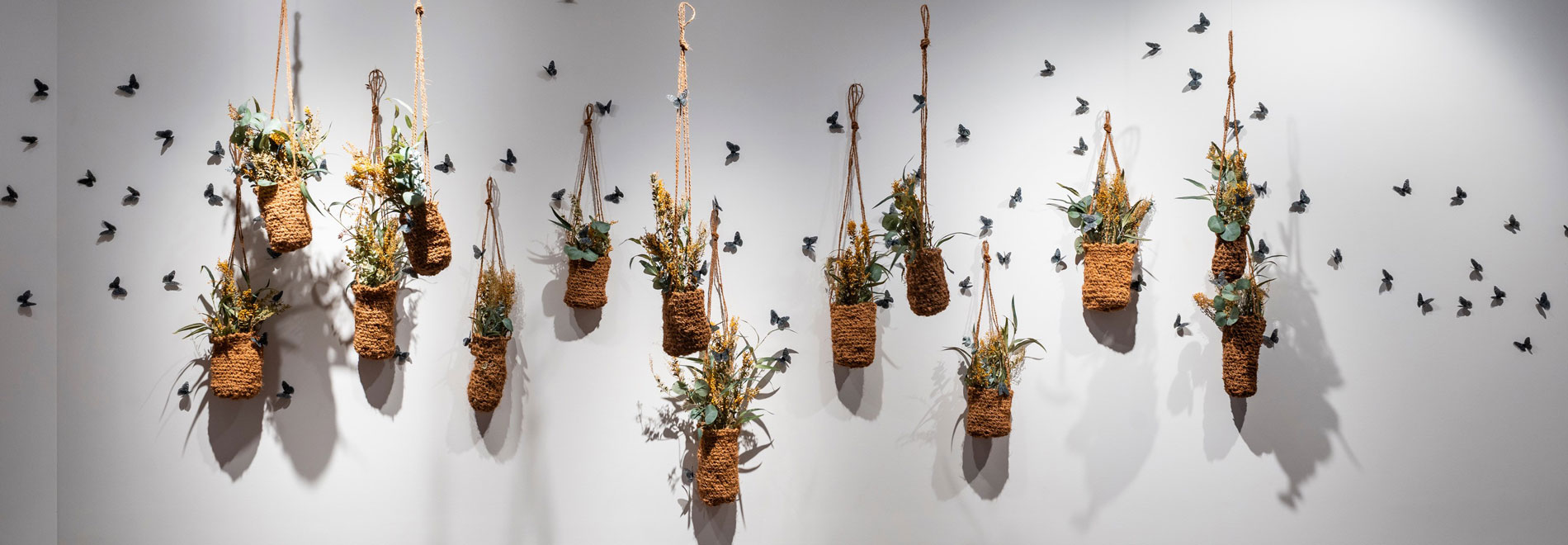
Image credit: Joe Ruckli
You might be interested in

Queensland Museum commits to ensuring representation and respectfully showcasing the contributions and stories of Aboriginal Peoples and Torres Strait Islanders through our research, exhibitions and programming.

This collaborative exhibition brings together stories of enduring connection, community strength, and cultural vitality.

Find out about our cultural and natural collections and explore thousands of specimens and artefacts online.